

Rising Commercial Electricity Rates in California – What Businesses and Property Owners Need to Know

Over the past several years, commercial electricity rates across California’s three major investor-owned utility territories: San Diego Gas & Electric (SDG&E), Southern California Edison (SCE), and Pacific Gas & Electric (PG&E) have increased significantly. For many businesses, energy costs are becoming an increasingly important factor in not only budgeting but also operational planning, profitability and long-term competitiveness.
Commercial Electricity Rates Have Increased Across California
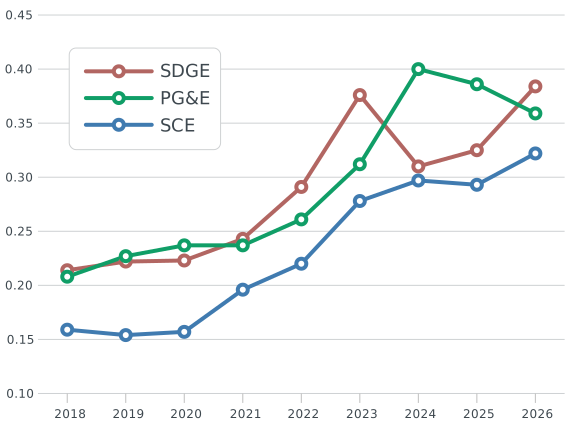
Graph: Commercial Electricity Rates Have Increased Across California
Medium-Sized Commercial Electricity Rates
2018-2026 Rate Increases:
This graph uses data gathered by CALSSA to show how much annual rates have increased for California commercial customers of SDGE, SCE, and PGE from 2018 to January 2026. Southern California Edison (SCE) has seen the highest annual electricity rate increases with 9.2%, followed by San Diego Gas & Electric (SDGE) at 7.6% average and Pacific Gas and Electric (PGE) at 7.1%.
While the pace of growth varied among utilities, the overall trend remained consistent: commercial electricity costs moved steadily upward across California. For businesses with large energy demands, these increases can represent tens of thousands of dollars in additional annual operating expenses. Over time, rising utility costs can increase budget uncertainty and make it more difficult for businesses to forecast one of their most essential operating expenses.
Why Are California Electricity Costs Rising?
There is no single reason behind rising electricity costs. Instead, several factors have contributed to increasing rates across the state. Utilities have invested heavily in wildfire mitigation programs, grid modernization initiatives, transmission and distribution infrastructure upgrades, and reliability improvements designed to support California’s evolving energy system. At the same time, California’s growing electricity demand, the electrification of transportation and buildings and state resource adequacy requirements continue to place additional pressure on the grid.
California also faces unique geographic and regulatory challenges. Maintaining a reliable electric system while integrating more renewable energy resources to meet State mandated goals requires significant investment in transmission infrastructure, energy storage and grid management technologies. In many cases, these costs are recovered through customer electricity rates.
While these investments are intended to improve long-term reliability and resiliency, they have contributed to higher electricity costs for commercial customers.
What Rising Electricity Costs Mean for Businesses and Commerial Property Owners
For many organizations, electricity is no longer simply a utility expense but a strategic business consideration. As rates continue to rise, the unpredictability of energy costs can significantly impact operating budgets and long-term planning.
Owner-Occupied Businesses
For owner-occupied facilities, rising electricity costs can directly impact operating margins and reduce budget certainty. Manufacturing facilities, distribution centers, cold storage operations and other energy-intensive businesses are often among the most affected. Over time, ongoing rate increases can turn energy into a significant source of financial risk.
Commercial Rental Properties
Property owners face a different challenge. As electricity costs rise, tenants become increasingly sensitive to operating expenses and occupancy costs. For many tenants, utility costs are a significant budget consideration that influences leasing decisions.
Buildings that can help tenants manage energy expenses may gain a competitive advantage in attracting and retaining occupants. A property’s ability to support more predictable operating expenses can enhance tenant satisfaction and improve overall asset performance in an increasingly competitive market.
Investor-Owned Properties
For investor-owned properties, rising electricity costs can influence the long-term financial performance of real estate assets. Energy expenses are becoming an important consideration in asset management and acquisition decisions. As operating costs rise and tenants place greater emphasis on affordability, investors face growing pressure to protect property competitiveness and preserve long-term asset value.
Why More Businesses Are Exploring Clean Energy
As electricity costs continue to rise, many California businesses are exploring clean energy solutions as part of their long-term energy strategy. On-site energy solutions such as solar energy and battery storage can help businesses gain greater control over energy costs while reducing dependence on utility-supplied electricity during certain periods. In addition to potential cost savings, these technologies can provide:
- Greater long-term cost predictability
- Reduced exposure to future utility rate increases
- Potential improvements in operational resilience
- Progress toward sustainability and emissions reduction goals
As system costs continue to decrease and adoption increases, clean energy is becoming an increasingly practical option for commercial and industrial organizations throughout California.
How Luminia Helps Businesses Evaluate Their Energy Opportunities
Every property has a unique energy profile. Factors such as electricity consumption patterns, building characteristics, operating schedules, available roof space, parking areas and site constraints all influence which energy solutions may be most effective.
For some businesses, a traditional Power Purchase Agreement (PPA) may be the best fit. Under this model, Luminia builds, owns, operates and maintains a solar installation on your rooftop and power is provided under a mutually agreed upon PPA. This option provides access to clean energy without the upfront capital investment typically associated with solar ownership.
In other cases, businesses and property owners may benefit from innovative programs developed in partnership with Community Choice Aggregators (CCAs) to provide broad access to businesses regardless of their credit rating or balance sheet.
Rather than offering a one-size-fits-all approach, Luminia evaluates each property individually to identify the most appropriate energy strategy based on site conditions, energy usage, financial objectives and available program opportunities. The goal is to help businesses make informed decisions that support long-term cost management and operational resilience.
Looking Ahead
The trend is clear: commercial electricity costs across California have increased significantly over the past decade, with continued upward pressure expected in the years ahead. While organizations cannot control future utility rates, they can better understand their energy exposure and evaluate opportunities to improve long-term affordability and cost predictability. As energy becomes an increasingly important factor in business operations, understanding a property’s energy profile is the first step toward making more informed decisions about the future.
Interested in learning more about commercial solar and energy storage opportunities?
Contact Luminia to discuss your property’s energy profile and explore potential solutions.